


How Stress, Sleep Deprivation, and Blue Light Are Quietly Damaging Your Skin
We are living in an era our skin was never designed for, making targeted solutions like tea tree acne gel increasingly relevant.
Chronic psychological stress, shortened and fragmented sleep, constant exposure to artificial lighting, and prolonged screen time, especially late-night mobile phone use, create a biological state where the skin benefits from targeted support such as tea tree acne gel.
The human body does not differentiate between a high-pressure work deadline and a real physical threat. In both cases, it activates the same hormonal response, primarily the release of cortisol. The skin, as one of the body’s most hormonally responsive organs, is often among the first systems to show visible consequences.
The result?
- Clogged pores
- Impaired barrier function
- Heightened inflammation
- Persistent or recurrent acne
- Increased sebum production
Acne in modern adults is rarely random. It is a physiological response to modern lifestyle stressors, especially common in urban populations where long work hours, high screen exposure, and disrupted circadian rhythms are increasingly normalized.
In this context, skincare is no longer a cosmetic choice. It becomes a therapeutic intervention.
This is precisely where evidence-based, dermatologically designed treatment gels play a critical role: fast-acting, targeted, low-burden solutions that work with the skin’s biology instead of overwhelming it.
How Acne Actually Develops and Why Stress Plays a Central Role
Acne is not a single-step problem. It is a multifactorial biological process involving four core mechanisms:
- Excess sebum (oil) production
- Inflammatory immune response
- Proliferation of acne-causing bacteria
- Follicular hyperkeratinization (clogged pores)
Where stress and sleep disruption enter the equation?
Under chronic stress, cortisol levels remain elevated. Cortisol directly stimulates sebaceous glands, increasing oil production. Excess sebum creates an ideal environment for bacterial overgrowth and pore blockage.
At the same time, sleep deprivation and blue-light exposure suppress melatonin secretion. Melatonin is not only a sleep hormone, it is a key regulator of night-time skin repair and inflammation control.
When this repair window is disrupted:
- Post-acne marks linger longer
- Healing of existing lesions slows
- New breakouts occur more easily
- Redness and inflammation persist
This explains why stress-related and hormonal acne often feels resistant to treatment: the underlying physiological cycle never fully resets.
Why Gel-Based Treatments Are Often Superior for Acne-Prone Skin
Most acne-prone skin types require treatment that balances efficacy with barrier preservation.
Water-based gels offer several advantages:
- Minimal pore-clogging risk
- Faster absorption without surface shine
- Rapid penetration into superficial skin layers
- Lightweight texture with no occlusive residue
In contrast, many creams rely on lipid or semi-occlusive bases. While beneficial for dry skin, they may exacerbate congestion and inflammation during active acne phases.
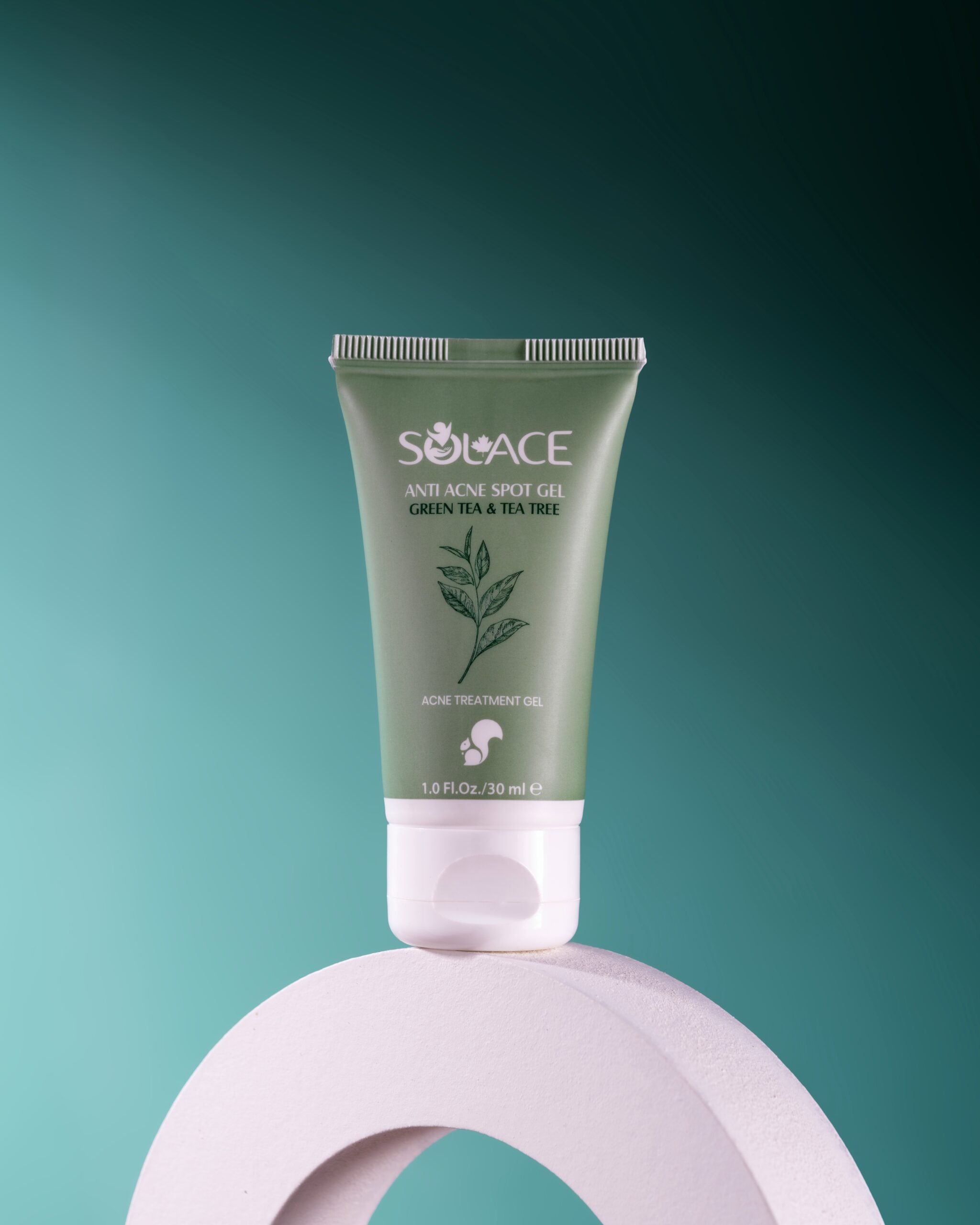
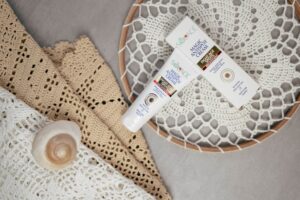
The Solace tea tree acne gel was formulated with this principle in mind: targeted action without additional physiological stress on the skin.
Gel, Serum, or Cream: Choosing the Right Format for Active Acne
- Gels: lightweight, fast-absorbing, ideal for inflamed or oily skin
- Serums: high concentration, often require layering and barrier support
- Creams: occlusive, suitable for dryness but higher risk during breakouts
During active acne treatment, the skin requires efficacy, speed, and breathability, a combination most consistently delivered by therapeutic gels.
Key Ingredients in Solace Tea Tree Acne Gel and Their Clinical Roles
Solace tea tree acne gel is a Canadian-formulated product, developed under strict quality standards and designed for modern urban skin exposed to environmental stressors.
Its formulation combines natural active extracts with dermatologically validated ingredients, creating a multi-pathway treatment approach.
1- Tea Tree Leaf Extract
A well-documented natural antibacterial agent, tea tree extract:
- Targets acne-causing bacteria
- Reduces the risk of new lesion formation
- Supports control of superficial infections
2- Green Tea Extract
Rich in polyphenols and antioxidants, green tea extract:
- Calms inflammatory responses
- Reduces visible redness
- Protects against environmental oxidative stress
3- Alpha Hydroxy Acids (AHA)
AHAs provide controlled chemical exfoliation by:
- Removing dead surface cells
- Preventing pore blockage
- Supporting smoother skin texture and tone
This mild resurfacing effect also helps reduce post-acne discoloration over time.
4- Vitamin A (Retinol)
Retinol plays a central role in acne management by:
- Promoting cell turnover
- Normalizing follicular keratinization
- Accelerating transition from inflammation to repair
Its inclusion supports long-term improvement rather than short-term suppression.
5- B-Complex Vitamins (Niacinamide & Panthenol)
Niacinamide (Vitamin B3):
- Reduces inflammation
- Helps minimize pore appearance
- Improves overall skin tone uniformity
Panthenol (Vitamin B5):
- Enhances hydration
- Soothes irritation
- Strengthens the skin barrier
This combination ensures that treatment does not come at the cost of dryness or sensitivity.
6- Vitamin E (Tocopherol)
A powerful antioxidant that:
- Protects against environmental damage
- Supports skin repair processes
- Enhances overall skin resilience
Together, these ingredients form a multi-layered therapeutic system:
antibacterial control + oil regulation + inflammation reduction + barrier repair.
Why Solace Anti-Acne Gel Stands Out in Real-World Use
Many acne products promise rapid results, but often at the cost of skin tolerance.
A common pattern:
- Initial improvement
- Followed by irritation, peeling, or rebound breakouts
Solace Anti-Acne Gel follows a different strategy.
Sustainable improvement over aggressive suppression
Rather than forcing rapid drying, the formulation focuses on normalizing the acne-prone environment:
- Better oil balance
- Fewer deep, painful lesions
- Reduced inflammatory intensity
- Improved skin tolerance over time
This makes it particularly suitable for stress-related and adult hormonal acne, which dominates in professional urban populations.
Skin Sensitivity: The Difference You Notice After Weeks, Not Days
One of the most frequent complaints with acne treatments is cumulative irritation:
- Chronic redness
- Thinning of the skin
- Heightened sensitivity to light and touch
Because Solace tea tree acne gel integrates calming and reparative components alongside actives, the skin is not simply treated, it is supported throughout the process.
Many users report that after several weeks, their skin no longer feels locked in a defensive state.
A Clinical Case Perspective: When Patients Lose Trust in Treatment
A 29-year-old patient presented with deep inflammatory acne along the jawline and chin, an archetypal stress-hormonal pattern.
Previous history included:
- Repeated facials
- Multiple topical prescriptions
- Interrupted treatments due to irritation
The skin showed signs of chronic inflammation and low tolerance.
The intervention focused on simplification, introducing only Solace tea tree acne gel with controlled, consistent use.
Observed progression
- Week 1: Reduced lesion tenderness and inflammation
- Week 2: Improved oil control without dryness
- Week 4: Fewer subdermal lesions, calmer skin tone, improved treatment tolerance
The most significant outcome was not just fewer breakouts, but the restoration of the skin’s ability to tolerate treatment.
Correct Usage and Common Mistakes
Optimal application
- Evening: after gentle cleansing
- Morning (if needed): before sunscreen
Quantity
- Full face: thin, even layer
- Spot treatment: lentil-sized amount per lesion
Layering order
- Gentle cleanser
- Solace tea tree acne gel
- Lightweight moisturizer (if needed)
- Sunscreen (daytime)
Common errors to avoid
- Over-application
- Combining with multiple strong exfoliants
- Stopping use immediately after temporary improvement
- Applying on fully wet skin
Relative contraindications
- Pregnancy (due to active ingredients)
- Extremely sensitive skin without patch testing
- Open or compromised wounds
Final Thoughts
Acne, especially in today’s world, is rarely superficial.
It reflects stress, sleep disruption, hormonal imbalance, and environmental pressure. When treatment focuses only on surface symptoms, recurrence is almost inevitable.
Effective acne care must be:
- Scientifically grounded
- Gentle enough for long-term use
- Compatible with modern lifestyles
- Focused on restoring balance, not forcing suppression
Solace Anti-Acne Gel was developed with exactly this philosophy:
to interrupt the inflammation cycle and activate genuine repair.
If you are dealing with stress-related or hormonal acne, feel exhausted by harsh products, and want a treatment you can actually sustain, this may be the logical next step in your skincare strategy.
References
Tea Tree Oil: Usefulness and Safety
Potential Benefits of Chamomile for Skin
Health Benefits of Retinol and Niacinamide



No comment yet, add your voice below!